
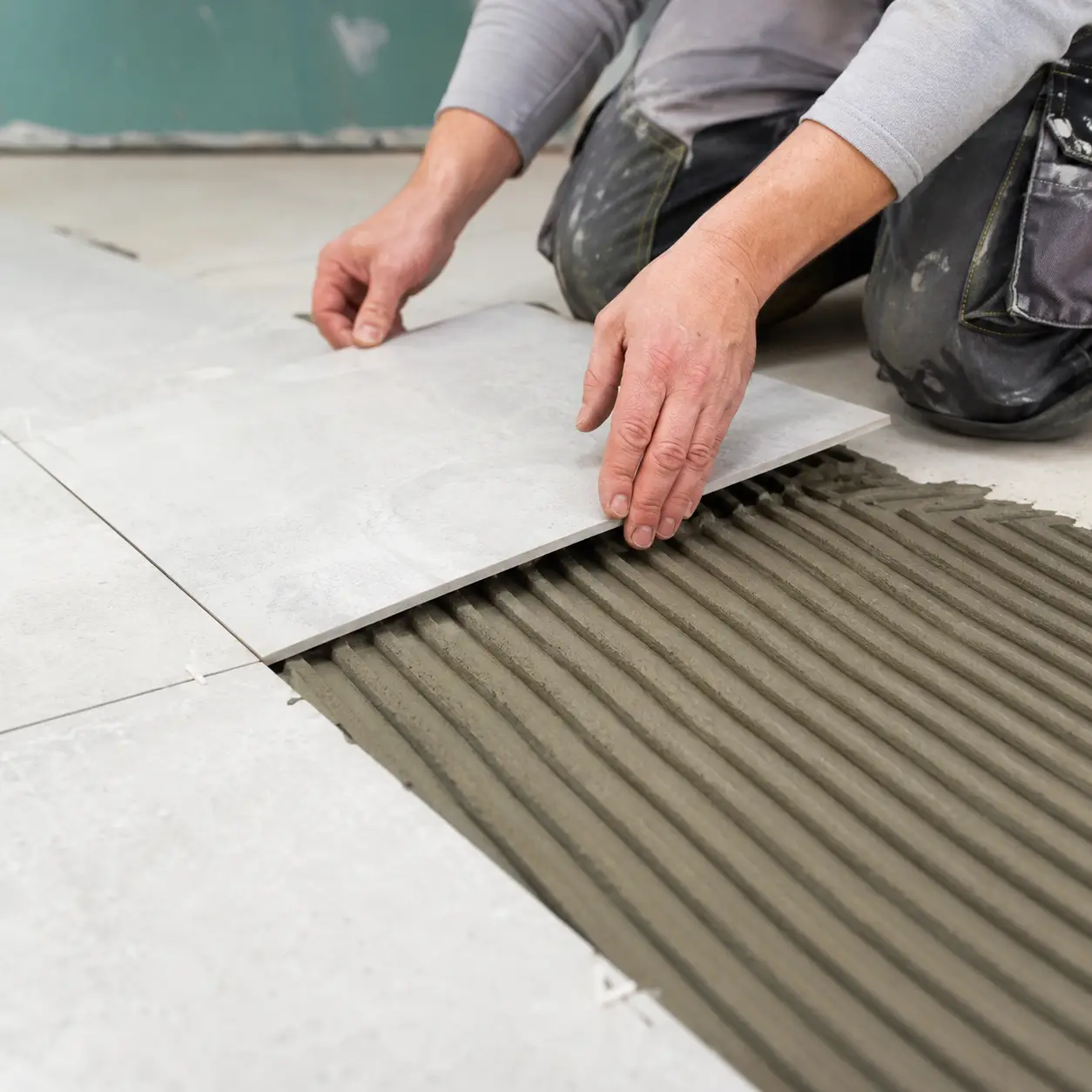
Tile installation quality depends greatly on the bonding material used under the tiles. Traditionally, cement mortar was used for fixing tiles, but modern construction projects now prefer tile adhesive because it provides stronger bonding, cleaner application and longer-lasting performance.
Tile adhesive is specially designed to bond ceramic, porcelain, wall, floor and large-format tiles. It is applied with a notched trowel, which creates uniform grooves and better contact between the tile and surface. This helps reduce hollow sounds, tile detachment, uneven placement and future cracking problems.
Cement mortar often requires a thicker layer and may not bond well with low-porosity tiles. It can also shrink and create weak areas if not mixed or applied correctly. Tile adhesive, on the other hand, provides controlled quality and better adhesion for modern tile systems.
For bathrooms, kitchens, balconies, commercial floors and exterior areas, using the right adhesive is very important. Some tiles need flexible adhesive, some need waterproof support and some need high-strength bonding. Proper surface preparation is also essential before application.
Tile adhesive improves installation speed, reduces material wastage and gives a neat professional finish. For durable tile work, always choose the correct adhesive type and follow professional application methods. This ensures stronger bonding, cleaner finishing and long-term tile performance.