
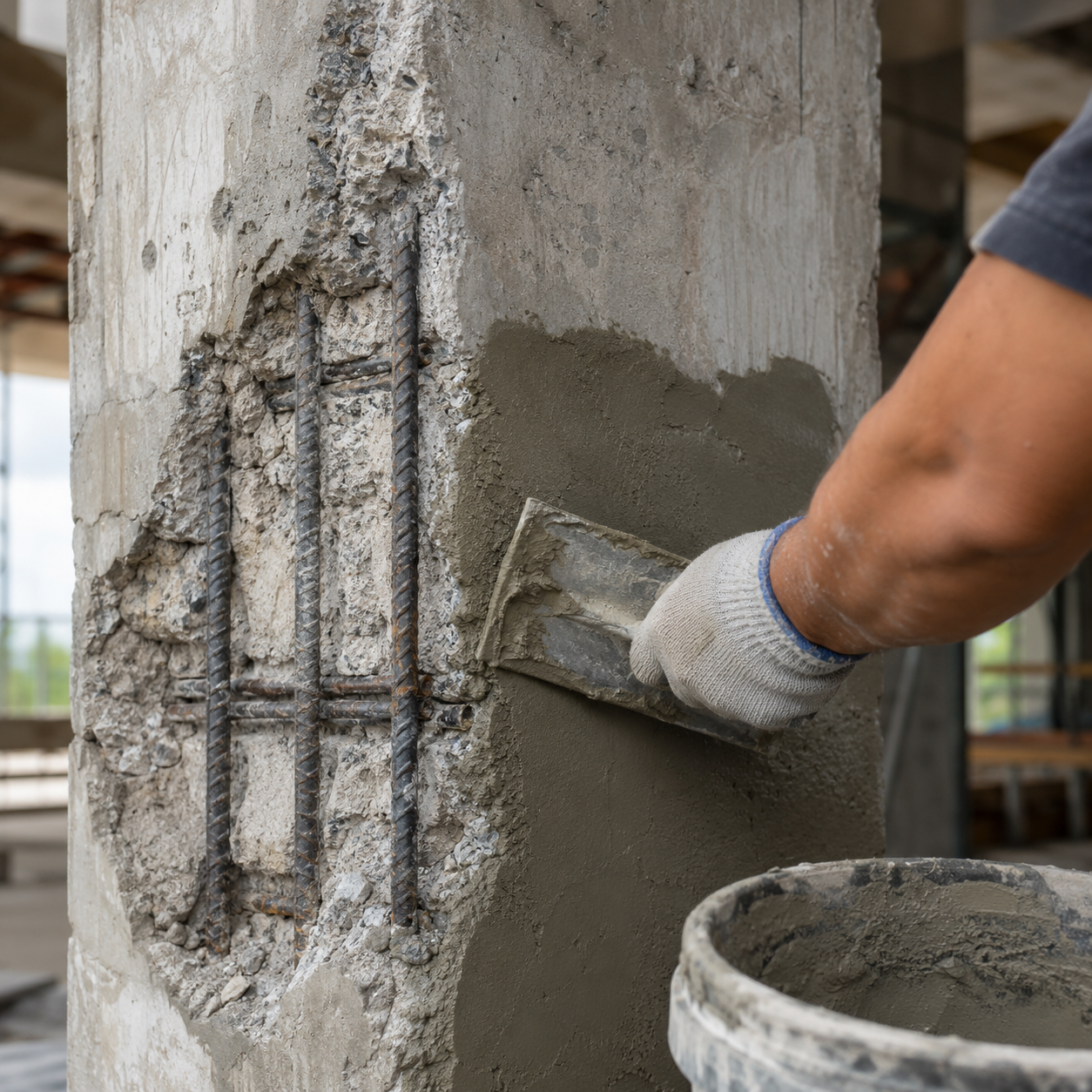
Concrete damage can appear in many forms, including cracks, spalling, honeycombing, broken edges, weak patches and exposed reinforcement. These problems may look small at first, but they can reduce the strength, safety and durability of a structure if they are not repaired properly. Professional concrete repair helps restore damaged areas and extend the life of the building.
The first step in concrete repair is identifying the cause of the damage. Cracks may happen because of poor workmanship, water leakage, shrinkage, overloading, chemical attack or steel corrosion. If the root cause is not treated, the same problem may come back again after repair.
A proper repair system includes removing loose concrete, cleaning the surface, treating exposed steel, applying bonding materials and filling the damaged area with suitable repair mortar. Ordinary cement mortar is not always enough for structural repair because it may shrink, crack or fail to bond strongly. Specialized repair materials provide better adhesion, strength and long-term performance.
Concrete repair is important for buildings, bridges, factories, parking areas, balconies and industrial floors. It improves appearance, protects structural elements and reduces future maintenance expenses. For safe and durable results, always use high-quality construction chemicals and skilled technicians who understand the correct repair process.